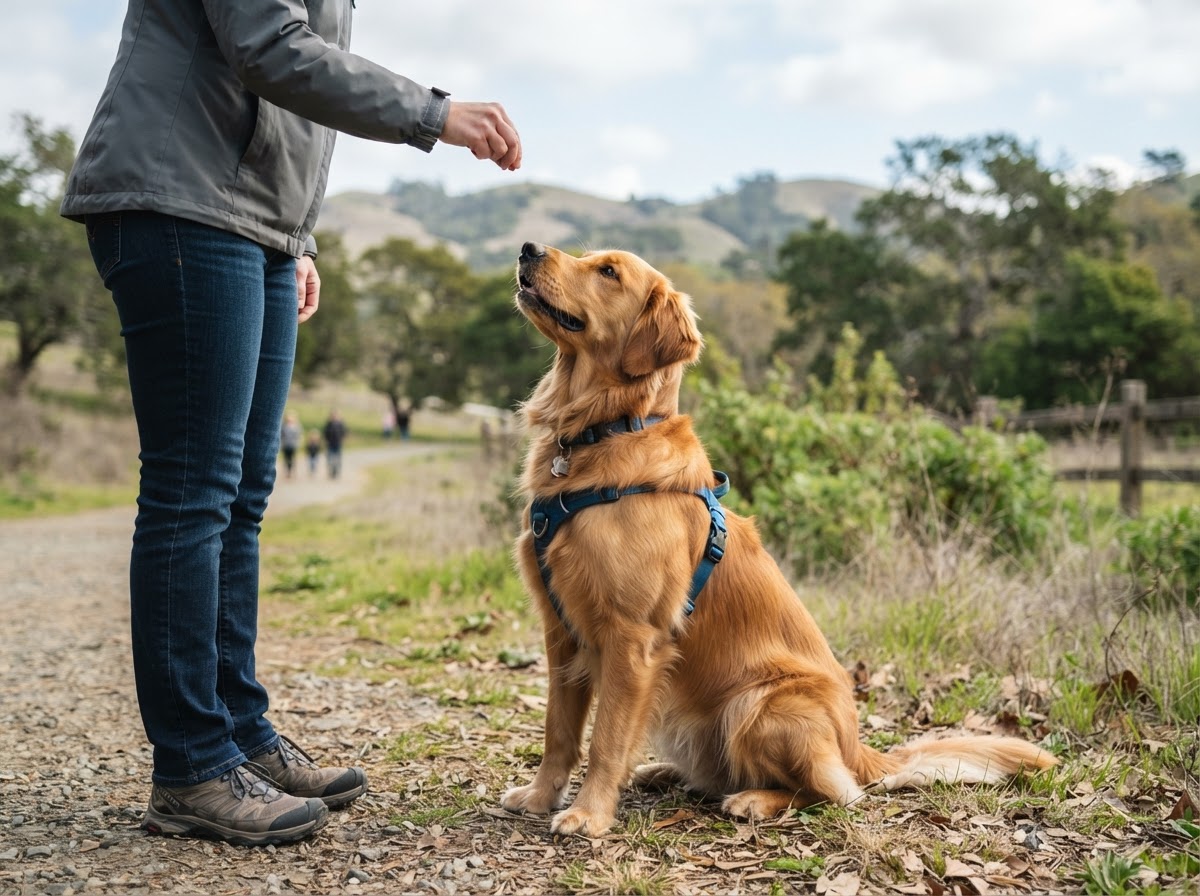
Start with the name
Before any command, your dog needs to know that their name means "look at me." Say the name, and when they turn toward you, reward it. Repeat often, in different rooms, at different times. A dog who checks in when they hear their name is dramatically easier to teach anything else.
Keep the name positive. If it only precedes baths or scolding, your dog will learn to ignore it.
Recall: the skill worth the most practice
Coming when called is the single most useful behavior a dog can have, and the one most worth practicing early. Start indoors with short distances and big rewards. Never punish a dog for coming back, even if they took their time—arriving should always be the best decision they made all day.
Build recall gradually: indoors, then the yard, then quiet outdoor spaces on a long line. Every success at an easy level earns the right to practice at a harder one.
Settling and being handled
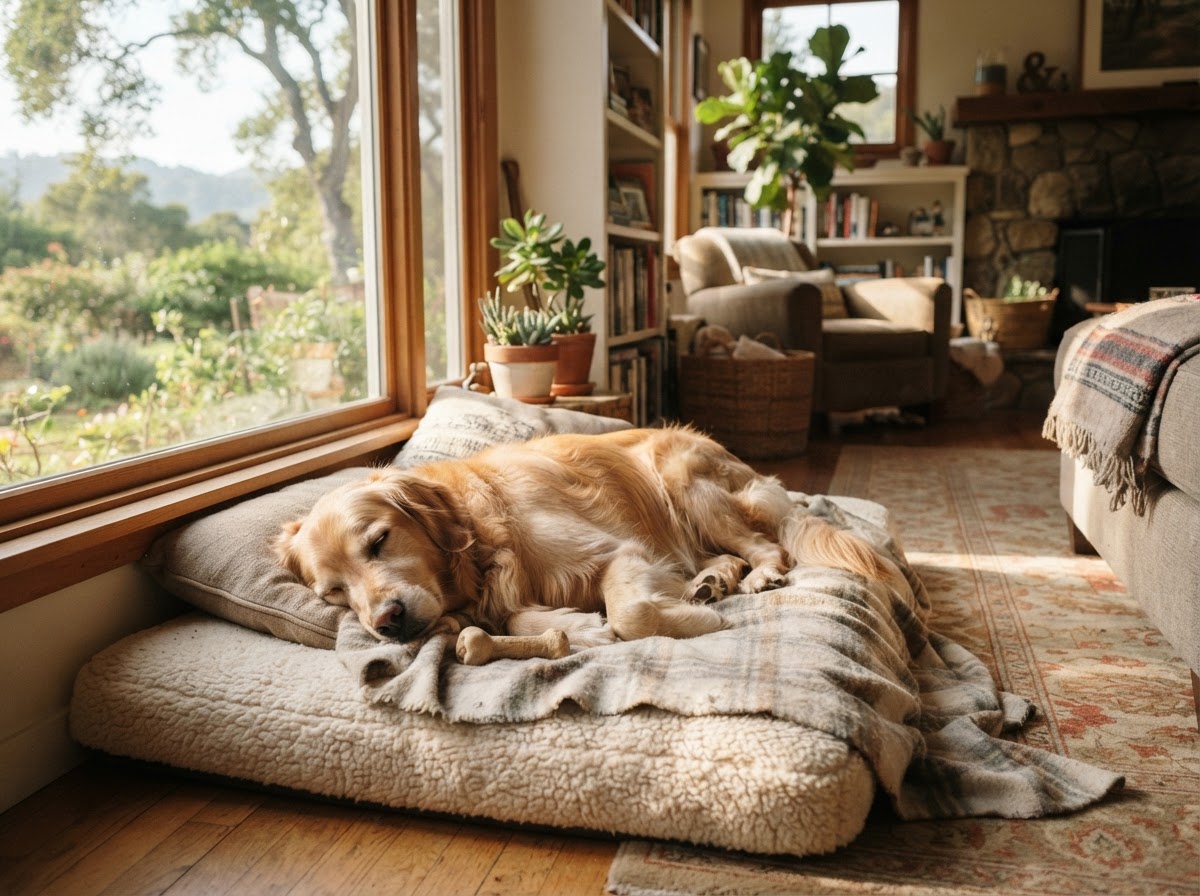
A dog who can settle on a mat or simply relax while you sit nearby is a dog who fits into real life. Practice short, calm moments—reward quiet, relaxed behavior rather than only responding to excitement.
Also get your new dog comfortable with handling: paws, ears, mouth, and gentle restraint. Pair each touch with something good. This makes vet visits, grooming, and everyday care far less stressful for everyone.
Loose-leash basics
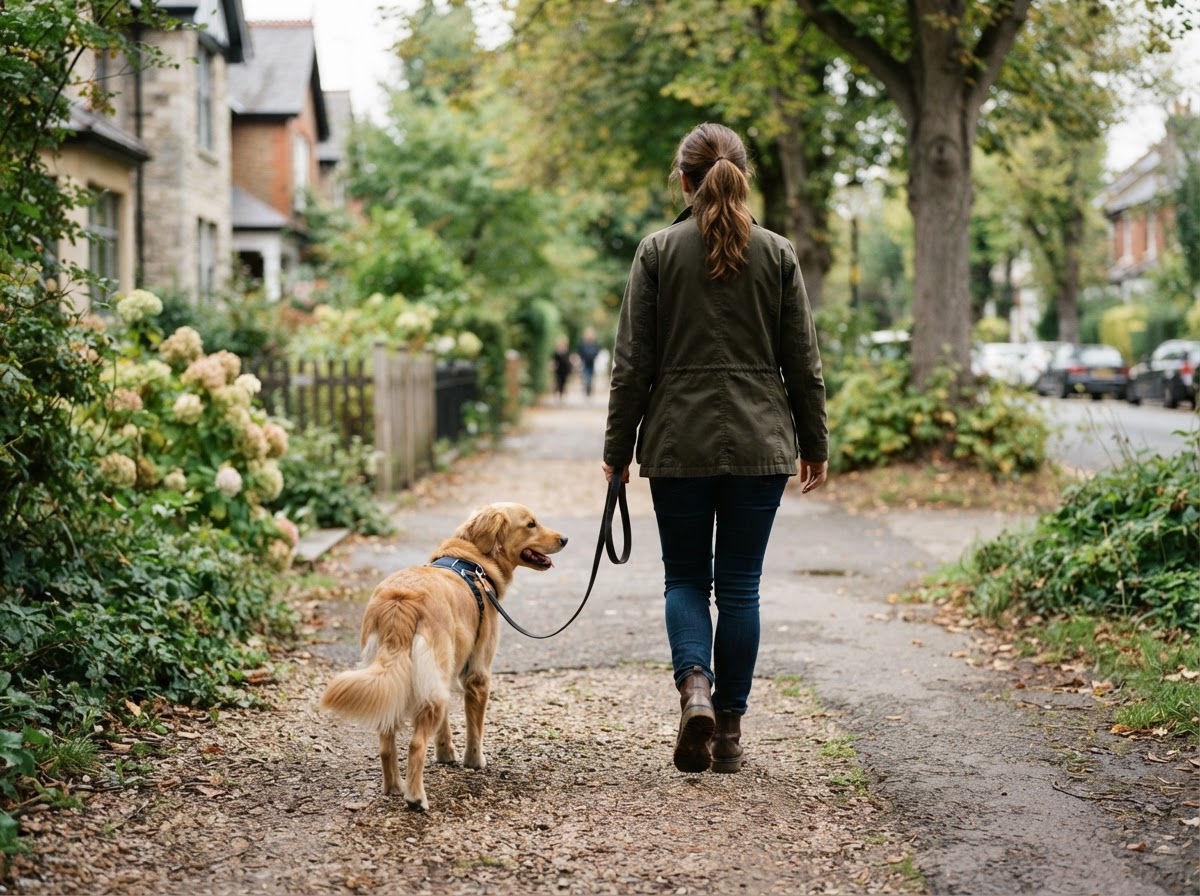
Walks are a big part of your dog's day, so polite leash behavior pays off immediately. Start in low-distraction areas and reward a slack leash. If your dog already pulls hard, see our leash manners guide for a fuller approach.
Remember that a new dog is learning your household's routine at the same time—where to eat, when to walk, what's allowed. Keep expectations consistent among everyone in the home, and the rest goes faster.
What to skip for now
Long training sessions, complex tricks, and off-leash work can wait. Short, frequent sessions—five minutes, a few times a day—outperform marathon practice with a dog who's still settling in. And if you'd like guidance tailored to your dog, dog training support is available throughout Marin County, starting with a conversation about your goals.
Need a hand with dog training?
Tell us about your pet, your schedule, and where you're located. We'll help you find the right next step.