Why dogs pull in the first place
From a dog's perspective, pulling is logical. They want to reach the interesting thing—the park, the sniff spot, the other dog—and the leash slows them down. When leaning forward moves them forward, the lesson is simple: pulling works.
Some dogs pull from excitement, some from anxiety, and some simply because no one ever taught them an alternative. High-energy breeds and young dogs pull more because there's more they want to get to. The cause matters, because the fix differs: an anxious dog needs confidence, while an excited one needs a way to earn forward movement.
What doesn't work
Punishment-based approaches—yanking, harsh corrections, or prong-style tools—tend to suppress the behavior without teaching an alternative, and they can damage the trust that makes training work at all. They also do nothing for the underlying excitement or anxiety driving the pull.
The other common mistake is inconsistency: allowing pulling sometimes and not others teaches the dog that pulling is worth trying, because it sometimes pays off.
Practical steps toward calmer walks
The goal is teaching your dog that a loose leash is what moves them forward. A few approaches that tend to help:
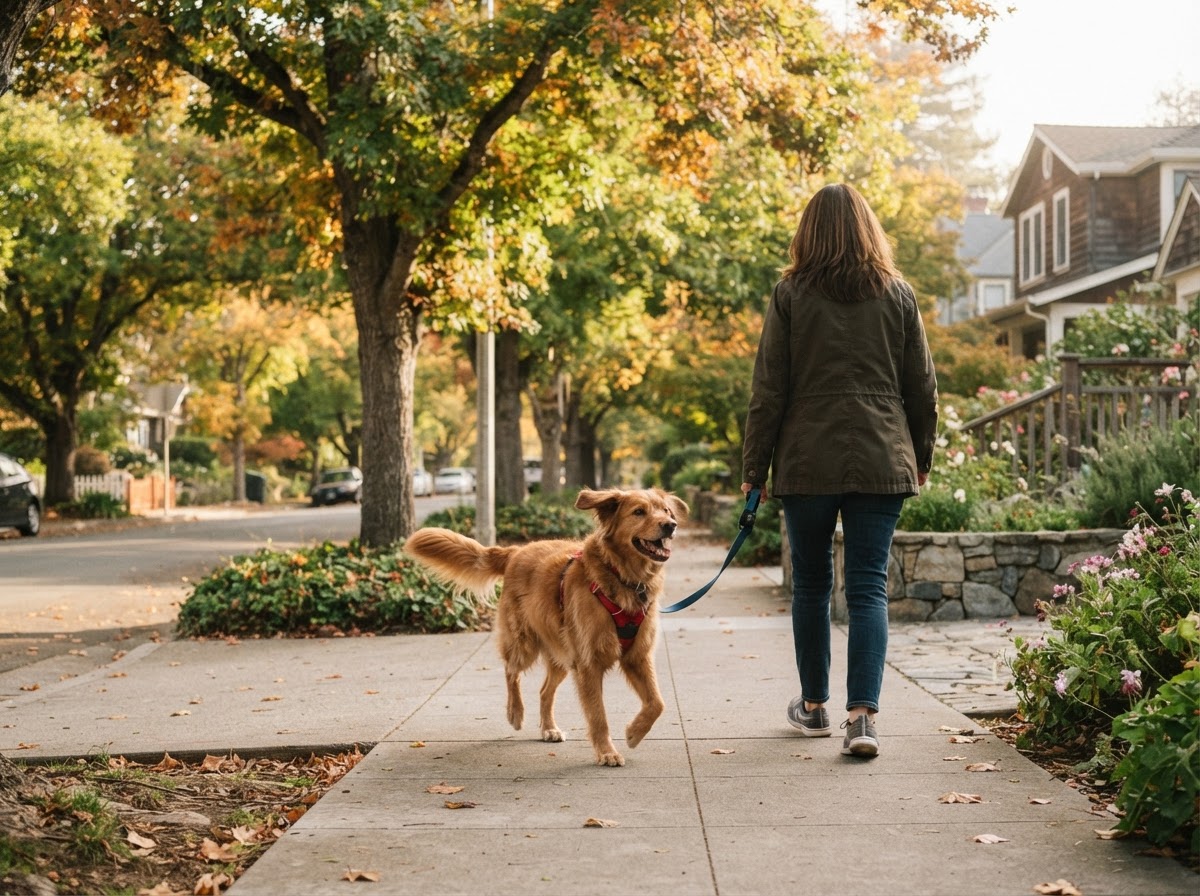
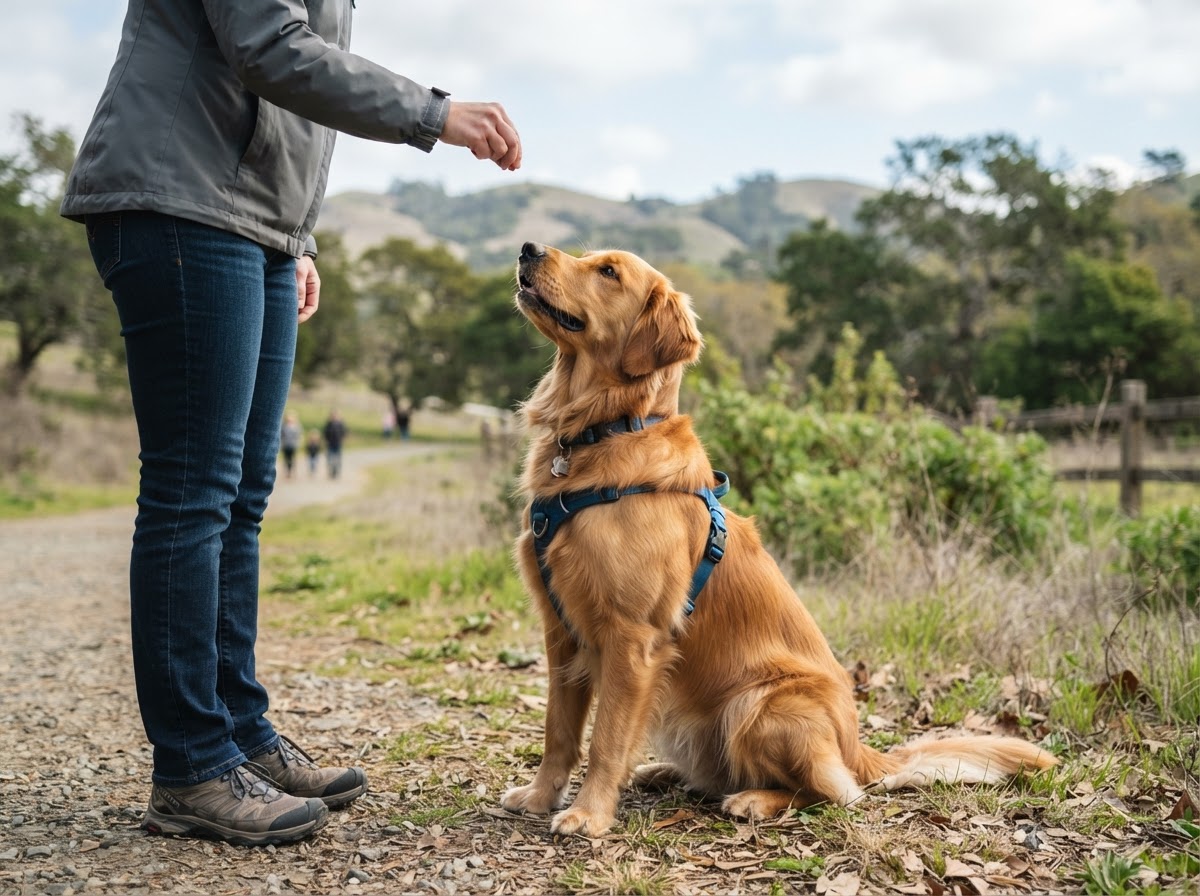
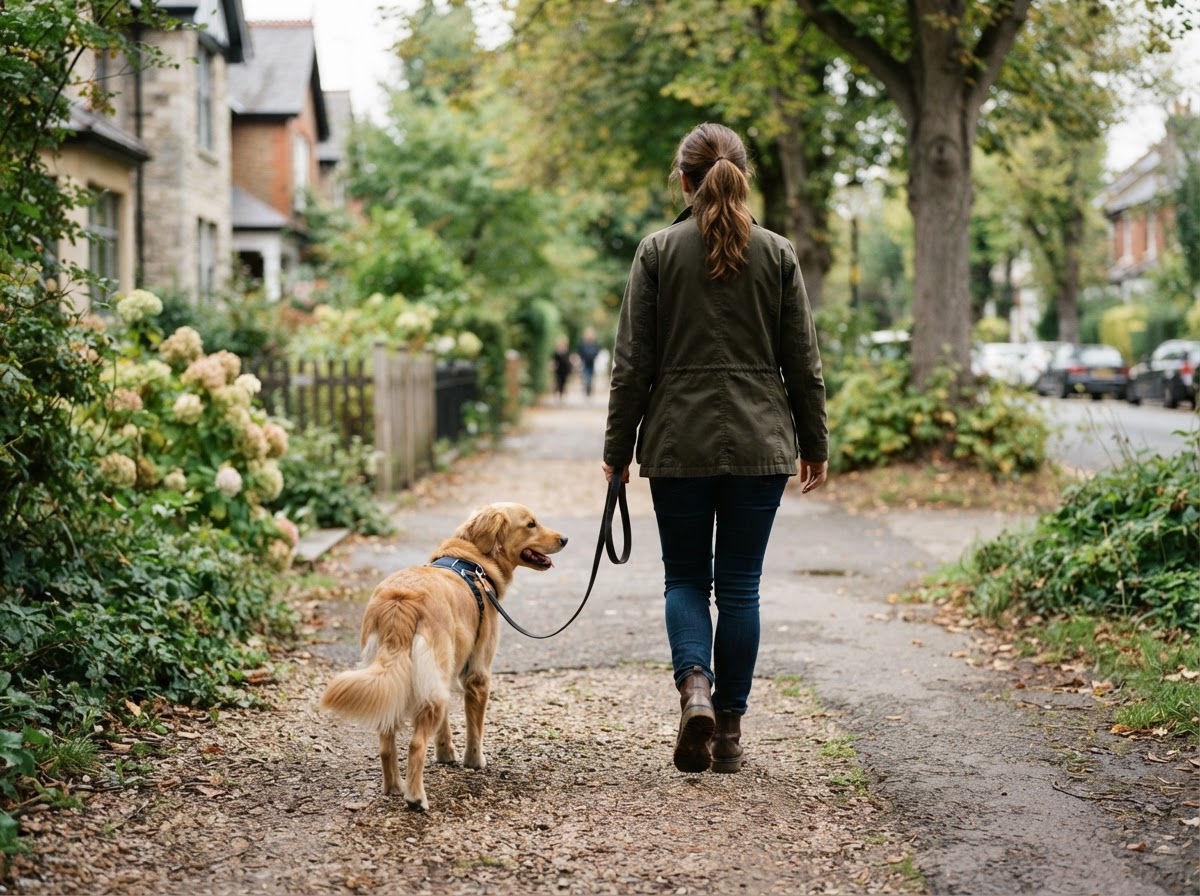
- Reward the loose leash — when the leash slackens, mark it and reward. Forward movement becomes the reward for walking politely.
- Be unpredictable — change direction occasionally so your dog checks in with you instead of charging ahead.
- Start small — practice in a low-distraction spot like your yard or a quiet street before graduating to busier paths.
- Meet exercise needs first — a dog with pent-up energy will struggle on any leash. A good run or play session before training walks helps.
- Use gear that helps, not hinders — a well-fitted front-clip harness can reduce pulling leverage without discomfort.
When to get help
If pulling comes with reactivity—barking, lunging, or fixating on other dogs—a structured training conversation is worth having before it escalates. Dog training support is available throughout Marin County, starting with a conversation about your dog, your goals, and the behaviors you want to work on. And if pulling makes walks too stressful to keep up, a dependable dog walker can help maintain your dog's routine while you work on it.
Need a hand with dog training?
Tell us about your pet, your schedule, and where you're located. We'll help you find the right next step.